


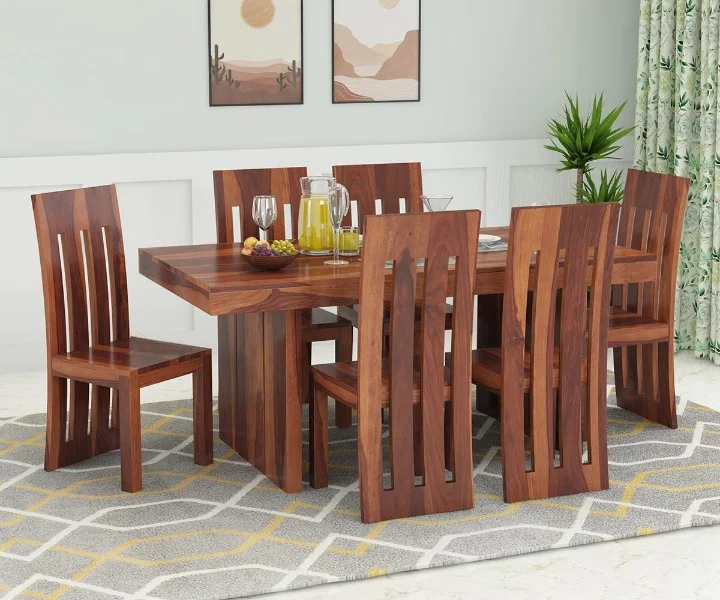
Finding the perfect dining table for your home isn’t just about style. This piece of furniture is where family members share meals, children do homework and guests gather for celebrations. Choosing the wrong size can lead to cramped movement, wasted space and a dining room that feels off balance. In this article we compare four‑seater and six‑seater tables, explore space and budget considerations and provide practical guidance tailored to Indian homes.
Why Dining Table Size Matters
In many Indian households the dining area is more than a place to eat. It serves as a workspace, study corner and social hub. Selecting a table that’s too big overwhelms a small room, while one that’s too small forces diners to squeeze together or host guests elsewhere. A poorly sized table can restrict footpaths, block access to cabinets and cause discomfort during long meals.
Proper sizing improves both function and aesthetics. When you leave enough clearance around the table, chairs slide out easily and people can walk behind seated diners without bumping elbows. An appropriately sized table also looks proportional to the room, making the space feel harmonious. With urban flats shrinking and joint families growing, considering size early on prevents future regrets and costly replacements.
Understanding Dining Table Sizes & Space Requirements
Dimensions of 4‑seater tables
A four‑seater table is usually designed to seat two people on each long side. Standard dimensions range from 36–48 inches long and 30–36 inches wide. Round versions typically measure 36–42 inches in diameter. These compact sizes allow the table to fit comfortably in an 8 × 8 ft room. When shopping, you might come across a glass top 4 seater dining table or a marble 4 seater dining table; the material doesn’t change the footprint but may affect weight and style.
For Indian apartments, a folding 4 seater dining table offers flexibility. It can expand during meals and fold away to free up space. When measuring for your home, keep in mind the 4 seater dining table size includes the chairs’ footprint and clearance zones. If you use a glass 4 seater dining table, check that the base supports the glass safely and that the dimensions of 4 seater dining table models you consider match your room layout.
Dimensions of 6‑seater tables
Six‑seater tables are larger and often rectangular. Typical lengths range from 60–72 inches with widths of 36–40 inches. These tables need a minimum 9 × 10 ft room or 10 × 10 ft for comfortable clearance. The size of 6 seater dining table options can vary based on design; oval and round versions require slightly wider spaces to allow chairs to move freely.
When browsing 6 seater dining table furniture, consider whether you prefer a glass top 6 seater dining table, a solid wood table or a combination of materials. Some designs incorporate benches or extendable leaves for flexibility. Always measure the full length and width with leaves extended if you plan to use them regularly.
Room size and clearance
As a rule of thumb, leave 36 inches (3 ft) of clearance on all sides of the table. This allows you to pull out chairs and walk around without squeezing past other diners. For high‑traffic areas or open‑concept spaces, 42 inches is more comfortable. You’ll also need 18–24 inches just to pull a chair away from the table comfortably.
To visualise the footprint, outline the table size and clearance on your floor with masking tape. Include doorways, sideboards and cabinets in your plan; this helps avoid buying a table that blocks access. When calculating how much space around the dining table you need, remember to account for interior design elements like rugs or sliding glass doors.
Space & Clearance Guidelines
Before finalising your purchase, take accurate measurements of your dining area. Use these guidelines to ensure proper spacing:
- Minimum clearance: Maintain 36 inches between the edge of the table and walls or furniture. This ensures comfortable movement around the table.
- Chair movement: Allow 18–24 inches beyond the table edge for pulling chairs out. Upholstered chairs may need more space.
- Table width per person: Aim for 24 inches of table width per diner to avoid bumping elbows.
- Walkways: In larger rooms, leave 42–48 inches of clearance for main walkways so people can pass behind seated guests.
If you plan to use a 4 seater dining table cover or a 6 seater dining table cloth, consider the extra fabric draping over the sides. A cover that hangs too long could be a tripping hazard in narrow spaces.
4 Seater vs 6 Seater Quick Comparison
The table below summarises key differences to help you choose the best fit for your home:
| Aspect | 4 Seater | 6 Seater |
| Seating capacity | Four adults | Six adults |
| Table size | 36–48 in × 30–36 | 60–72 in × 36–40 |
| Room size needed | 8 × 8 ft | 9 × 10 ft or more |
| Clearance | 3 ft around table | 3.5–4 ft around table |
| Ideal for | Small families, couples, apartments | Larger families, frequent hosts |
| Typical price (India) | ₹20k–45k for solid wood | ₹45k–90k+ for solid wood |
| Flexibility | Easier to move, often foldable; limited guest seating | More seating, less portable, suits dedicated dining rooms. |
| Best shapes | Round or square for tight spaces | Rectangular or oval for efficient seating. |
4‑Seater Dining Table – Advantages & Considerations
Four‑seater tables are popular in urban India because they balance seating capacity with compact size. Here are key points to consider:
Pros
- Space‑efficient: Fits comfortably in small dining rooms or open‑plan layouts. A round or square wood 4 seater dining table leaves room for cabinets or a balcony door.
- Affordable: Typically costs less than larger tables; a quality solid‑wood model ranges from ₹20,000 to ₹45,000.
- Versatile placement: Can be placed against a wall, near a window or even in a corner; folding versions free up space when not in use.
- Lightweight options: Materials like plastic 4 seater dining table or engineered wood make the piece easy to move for cleaning.
- Minimalist look: A simple design keeps the room feeling open and uncluttered.
Cons
- Limited seating: Offers no extra chair for guests; larger families may find it insufficient.
- Smaller surface area: Less space for serving dishes, laptops or homework materials.
- May need upgrade: If your family grows or you start hosting dinners, a bigger table becomes necessary.
When exploring options, pay attention to materials. A wood 4 seater dining table provides warmth and durability, while a glass top 4 seater dining table adds a modern feel but requires careful handling. Marble tops are luxurious but heavy and need sturdy bases. For easy maintenance, some people use a 4 seater dining table cover to protect the surface.
6‑Seater Dining Table – Advantages & Considerations
A six‑seater table offers generous seating and is often the centerpiece of medium‑to‑large dining rooms. Consider these points before choosing one:
Pros
- Accommodates more diners: Suitable for joint families or households that entertain guests frequently.
- Ample surface area: Plenty of space for serving dishes, board games or craft projects; suits open kitchens where meals spill into longer conversations.
- Long‑term flexibility: Even if you currently need fewer chairs, a 6‑seater future‑proofs your space as the family grows.
- Design variety: From modern 6 seater dining table styles to traditional carved pieces, there are numerous shapes and finishes. You’ll find both compact and expansive 6 seater dining table design options to match your décor.
Cons
- Requires more space: Needs a room at least 9 × 10 ft with wider clearance. A table squeezed into a small apartment can obstruct walkways and overwhelm the room.
- Higher cost: A solid‑wood 6‑seater costs between ₹45,000 and ₹90,000. Glass or marble tops may increase the price.
- Less mobility: Heavier and harder to move than smaller tables; unsuitable for multipurpose spaces that require frequent rearrangement.
- Maintenance: Larger surfaces need more upkeep; a 6 seater dining table cover or cloth may be necessary to protect from spills and scratches.
When browsing 6 seater dining table designs, think about how they fit with your home’s scale. Rectangular tables are the most common and maximise seating, while oval versions soften the look and improve circulation. For a contemporary aesthetic, a modern 6 seater dining table might combine metal legs with a wooden or glass top. If you prefer a more traditional vibe, carved wooden legs or a pedestal base could be ideal.
Shape Comparison – Which Works Better?
Choosing the right shape ensures your table complements the room rather than competes with it. Here’s how different shapes work for four‑ and six‑seater settings:
Rectangular
- Best for: Long or narrow rooms; both four‑ and six‑seater layouts.
- Advantages: Maximises seating capacity; can be placed against a wall; provides clear head and foot positions.
- Considerations: Requires enough length for comfort; may feel formal; ensure you have adequate clearance at the ends.
Round
- Best for: Square or compact rooms where space is limited.
- Advantages: Encourages conversation; no sharp corners, making it safe for children. Seats four comfortably and can occasionally squeeze in two more with compact chairs.
- Considerations: Less suitable for six adults; may require a larger diameter for bigger groups; centrepieces or large serving dishes can crowd the surface.
Square
- Best for: Small families or balanced, symmetrical spaces.
- Advantages: Feels cosy and evenly distributes seating; good for a family of four.
- Considerations: Larger square tables can make reaching dishes difficult; may dominate a room if the space is narrow.
Oval
- Best for: Spacious or open rooms needing softer lines.
- Advantages: Combines the capacity of a rectangle with the flow of a round table; seats six comfortably; looks elegant and contemporary.
- Considerations: Requires more floor space than round tables; edges may extend into walkways if the room is small.
No single shape suits everyone. Match the shape to your room dimensions, usage and aesthetic preferences. Families who often shift their dining table to serve as a workspace might prefer rectangular or square shapes with extendable leaves. A dining table set with matching chairs ensures the proportions of the table and seating work well together.
Related Blog: Different Types of Dining Tables: Shapes, Sizes, and Styles
Material Options & Durability
Materials influence not just how your table looks but also how long it lasts and how much care it needs. The most common options in India are:
Solid wood
Solid wood tables (often made from sheesham, teak or mango) are prized for their strength and longevity. With proper care, they can last 20–30 years. Wood ages beautifully, gaining character over time, and scratches or dents can often be sanded out. A wood table suits traditional interiors and pairs well with cushioned chairs. However, solid wood is heavier and more expensive than other materials.
Engineered wood
Engineered wood is a cost‑effective option made from layers of wood fibres bonded together. It’s lighter than hardwood and often comes with laminate or veneer finishes. While less durable, it offers a budget‑friendly way to achieve a wood‑look table. Engineered wood works well in rental homes or for those who may upgrade later.
Glass
A glass table, whether as part of a glass top 4 seater dining table or a sleek 6 seater dining table glass design, adds a contemporary feel and allows light to flow through the room. Glass tables are easy to clean but can show fingerprints and scratches easily. They require sturdy bases, often metal or solid wood, and are not ideal for households with very young children.
Marble and stone
Marble and stone tabletops are luxurious and durable. They stay cool to the touch and are resistant to heat. However, they are heavy and porous; spills need to be wiped quickly to prevent stains. Marble tables pair well with wooden or metal frames to provide stability.
Plastic and synthetics
Plastic tables are lightweight, affordable and easy to clean. While less common as primary dining tables, a plastic 4 seater dining table might appeal to families needing a portable option for balconies or outdoor areas. Over time, plastic can scratch or discolour, but it’s practical for temporary setups or as a secondary dining spot.
When evaluating durability, consider your lifestyle. Families with young children might prefer sturdy solid wood or engineered wood that can handle wear. Those seeking a minimalist look may choose glass or marble with simple bases. A glass top 6 seater dining table combines elegance with large seating capacity, but consider the weight and maintenance
Price & Budget Comparison (India)
Prices vary widely based on materials, craftsmanship and design. Here’s a general guide:
- 4 seater dining table price in India: A solid‑wood four‑seater typically costs ₹20,000–45,000. Engineered wood or plastic versions can start lower, while marble or designer models may cost more.
- 6 seater dining table price in India: For solid wood, expect ₹45,000–90,000 or more. Glass, marble or bespoke designs can push costs higher.
Factors affecting price include the type of wood, finish, carvings and whether chairs or benches are included. Buying a complete dining table set often saves money compared to purchasing the table and chairs separately. It also ensures the seating height and design are matched.
When budgeting, think long‑term. A well‑built table can last decades, while cheaper materials may need replacement sooner. If budget is tight, opt for a simple solid‑wood table with a plain design and invest in comfortable chairs later. To protect your investment, use a 6 seater dining table cover or placemats to minimise damage.
Lifestyle & Usage Considerations
Your household’s needs should guide whether you choose four or six seats. Here are factors to consider:
Family size and growth
If you’re a couple or a small nuclear family with two children, a four‑seater may suffice for daily meals. Families expecting more members or those with frequent visitors benefit from the extra seats of a six‑seater.
When people search “which dining table size should I buy” or “best dining table size for family of 4,” the answer often depends on available space and how many people dine together most nights. If your children do homework at the table or you host parents during holidays, a six‑seater might be more practical even for a family of four.
Hosting habits
Frequent hosts need extra seating. A six‑seater allows you to entertain guests without adding mismatched chairs or using side tables. Occasional hosts might prefer a four‑seater with extendable leaves to accommodate guests on special occasions.
Work and study
Modern dining rooms often double as offices or study corners. If you or your children work from the dining table, additional surface area is useful. A six‑seater provides room for laptops and notebooks alongside dinner plates. Conversely, if your dining area is separate and your family eats together briefly, a smaller table leaves space for other furniture.
Decor and maintenance
Think about how the table fits with your decor. A rustic solid‑wood table adds warmth to traditional homes, while a sleek glass table complements modern interiors. Table covers protect the surface and can change the look seasonally. A 4 seater dining table cover might be sufficient for everyday use, whereas a 6 seater dining table cloth can double as a runner for festive gatherings.
Space Planning Tips for Indian Homes
Space constraints are common in Indian apartments. These tips will help you maximise your dining area:
- Measure before you buy: Use a measuring tape to determine the maximum table size that allows at least 36 inches of clearance. Mark the area with tape to visualise the footprint before purchase.
- Consider extendable tables: An extendable table offers flexibility—compact for everyday meals and longer for gatherings. Many models include hidden leaves or drop‑leaf sides.
- Use benches or stools: Benches slide under the table when not in use, saving space. They can also seat more people than individual chairs.
- Opt for slim or pedestal legs: Tables with slender legs or a central pedestal free up legroom and make the space feel less crowded.
- Choose multifunctional pieces: Some tables come with built‑in storage or shelves beneath the top. These can store placemats, table linens and crockery.
- Use light colours and reflective surfaces: Light‑toned wood or glass can make a small room appear larger. Mirrors on adjacent walls can also enhance the sense of space.
- Keep traffic flow in mind: Avoid placing the table in a pathway between rooms. If your home has an open layout, visually define the dining area with a rug that extends 24 inches beyond the table.
Buying Guide – How to Choose the Right Dining Table
The following steps help you make a confident decision:
- Assess your family’s needs: Count how many people dine together daily and consider future changes. If you plan to start a family or host guests often, lean towards six seats.
- Measure your space: Note the room dimensions, including doorways and furniture placement. Ensure there’s at least 3 ft clearance around the projected table.
- Determine the table shape: Match the shape to your room. Choose rectangular for long rooms, round for square spaces, square for balanced layouts and oval for open concepts.
- Choose materials: Decide between solid wood for durability, engineered wood for budget friendliness, glass for a modern touch, marble for luxury or plastic for portability. Mix materials if you like (e.g., a wooden base with a glass top).
- Check height and comfort: The standard dining table height is around 30 inches. Make sure chairs fit underneath and that diners have enough legroom.
- Set a budget: Factor in the cost of chairs, table covers, placemats and any accessories. Compare the price of ready‑made sets versus buying pieces separately. Remember that solid wood may cost more but lasts longer.
- Evaluate storage and flexibility: If you need extra storage, look for tables with drawers or shelves. Extendable tables or foldable designs suit homes that require flexible furniture.
- Review design details: Ensure the table complements your decor. Look for clean lines, carved accents or metal legs based on your preference. Check that a glass top or marble slab is securely attached.
- Think long‑term: Visualise how the table will fit your life in five years. Investing in a piece that can adapt to changing needs is often better than choosing the cheapest option.
Click Here to Explore Popular Category
Conclusion
Selecting between a four‑seater and six‑seater dining table is a thoughtful process involving space, budget and lifestyle considerations. Four‑seater tables are ideal for small families or compact spaces, offering affordability and versatility. Six‑seater tables suit larger households, frequent hosts or those who see the dining area as a central gathering spot.
By measuring your room, understanding clearance requirements and comparing materials and shapes, you’ll find a table that enhances your home’s comfort and style. Whether you prefer a cosy wooden four‑seater, a modern glass six‑seater or something in between, the right dining table creates a welcoming space for meals, conversations and memories.
FAQ’s
Q1. What is the size difference between a 4 seater and a 6 seater dining table?
A 4 seater dining table is generally around 3–4 feet long and 2.5–3 feet wide, while a 6 seater is closer to 5–6 feet long and about 3 feet wide. The larger table seats more people but needs more room.
Q2. How much space should I leave around a dining table?
Leave at least 3 feet of open space on all sides of the dining table so chairs can be pulled out and people can move around comfortably. In tight rooms, stick to this minimum clearance; if space allows, a bit more makes movement easier.
Q3. Is a 4 seater dining table enough for a family of four?
Yes, a four‑seater table is usually sufficient for a family of four. It fits well in smaller rooms, offers enough surface area for meals, and allows comfortable seating. Choose a table with appropriate dimensions to ensure everyone has enough elbow room.
Q4. Can a 6 seater table fit in a small Indian apartment?
A 6 seater table can fit in some apartments, but you’ll need at least a 9×10 ft space to accommodate it comfortably. Measure your dining area and account for clearance before deciding. If space is tight, consider an extendable table instead.
Q5. What is the price range for 4 seater and 6 seater dining tables in India?
In India, a 4 seater table starts around ₹5,000–₹15,000 for budget models and goes up to ₹45,000 or more for solid wood. A 6 seater table can range from ₹10,000–₹20,000 for simple designs to ₹90,000+ for premium materials.
Q6. Which table shape works best in small spaces?
For small spaces, round or square tables work well because they use space efficiently and allow easy movement. Rectangular tables are better for longer rooms, while oval tables suit open layouts and offer a softer look while still seating more people.
Q7. How do I choose between a 4 seater and a 6 seater for long-term use?
Consider your current family size and whether you’ll need more seats soon. If you plan to host or grow your family, a 6 seater or extendable table offers flexibility. If space is limited and your family is small, a 4 seater is likely sufficient.
Q8. What room size suits a 4 seater versus a 6 seater dining table?
A 4 seater table typically fits in an 8×8 ft dining area, while a 6 seater needs around 9×10 ft. Make sure to leave enough walking space around the table so people can sit down and get up comfortably without bumping into walls or furniture.
Instagram : Dron wood
Facebook Page : Dron wood
